
Your needs, this model
Does it fit your priorities?
What T3 weight does Hayabusa associate with sparring?
The product page recommends 14–18 oz for bag and pad work, partner drills, and sparring. Confirm your coach’s and gym’s required weight; the product page is not a rule for every gym or sanctioning body.
Explore this need in the finder →Does glove weight tell me whether the hand pocket will fit?
No. Ounces are the glove’s listed weight, not a hand-circumference size. Check Hayabusa’s size guidance and judge the pocket with the wraps you plan to wear; fit cannot be established from ounces alone.
Explore this need in the finder →What is the practical distinction between T3 and S4?
T3 has Dual-X closure with four Fusion splints and multi-layer foam; S4 uses a single strap and single-layer foam splinting. Those are documented construction differences, not a claim that either model prevents injury.
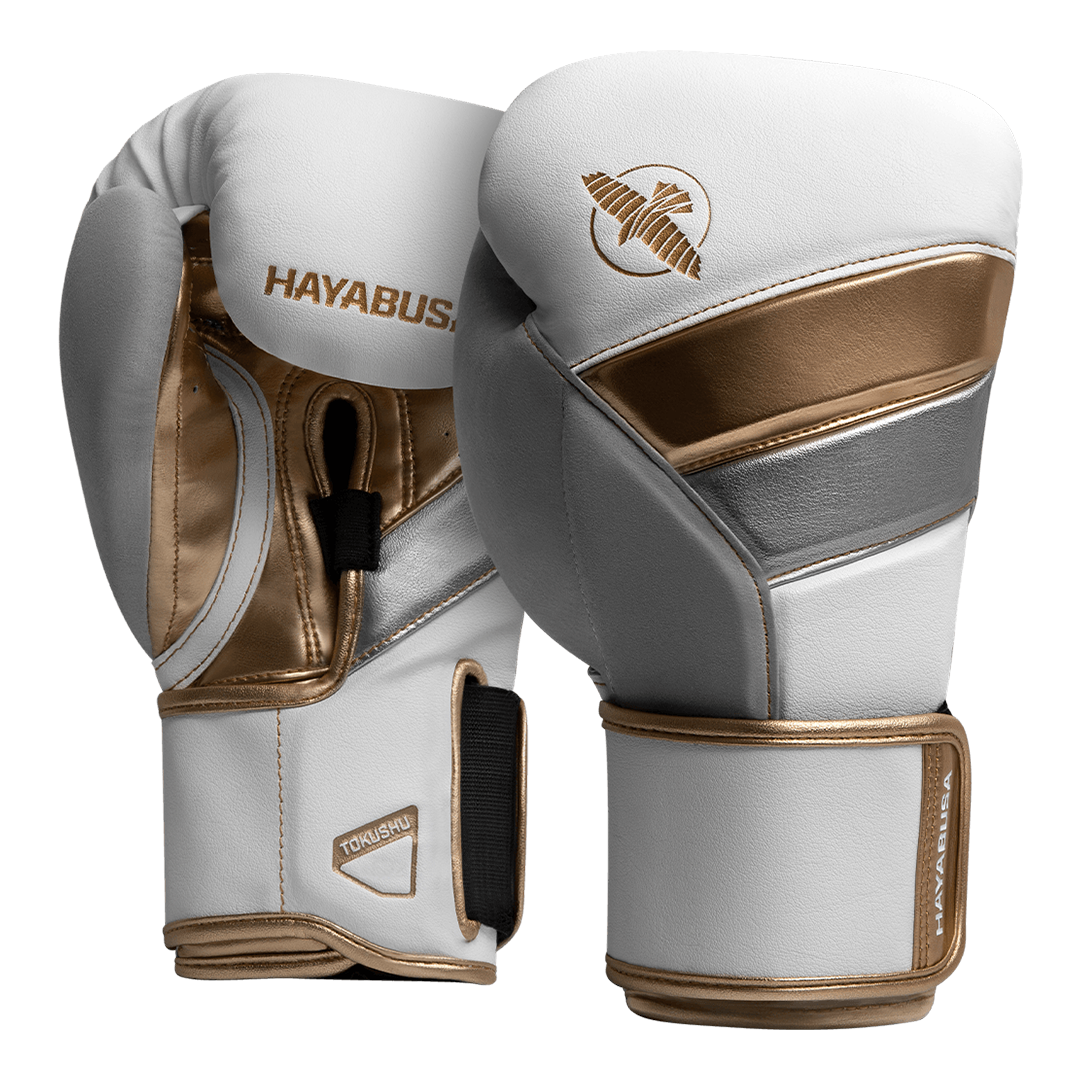
Explore this need in the finder →The T3 is an unusual glove to assess from a spec sheet because its clearest selling point is not a claim about punch power; it is the way the wrist is held. Hayabusa lists Dual-X interlocking hook-and-loop straps with four Fusion splints, plus multi-layer foam at the knuckles. That gives the buyer concrete construction choices to compare with a simpler single-strap glove such as the S4. This is a research-based assessment of the published model, not a hands-on fit or durability test.
What the current T3 name covers
The US product page presents T3 Boxing Gloves in five listed weights—10, 12, 14, 16, and 18 oz—and a group of selectable colorways. I treat those as one model family for this review because the page presents them as options under one product identity. A marketplace offer still needs a careful check: a search result may use “T3” loosely or mix another family, weight, or color into the same listing. The specific T3 page, not a seller title alone, is the reference for this assessment.
There is no measured hand-volume chart in the product copy I reviewed. Ounces describe the glove’s listed weight, not the circumference of the wearer’s hand. Use the manufacturer’s size guidance and consider the hand wraps you will actually wear; a glove can be the right ounce weight and still feel wrong in the pocket. If you are between sizes, getting an in-person fit check is more informative than guessing from body weight alone.
Why the dual closure is the decision point
The T3 closes with two interlocking straps and uses the manufacturer’s four-splint wrist system. That is a more structured arrangement than one hook-and-loop strap. It may appeal to someone who wants a glove that gives more adjustment around the wrist and likes the feeling of a snug, deliberately secured closure. But the number of supports on a product page is not proof that your wrist will sit comfortably or that the glove prevents injury. Wrist shape, hand wraps, technique, and the way you close the straps all matter.
There is a practical tradeoff too: two interlocking straps mean more placement and fastening steps than a single strap. A boxer who puts gloves on without help should decide whether the more involved closure is worthwhile. Do not assume that the model can replace a coach’s instruction on wrapping or an assessment of recurring pain.
Read the weight guidance as a training plan
Hayabusa lists 10–12 oz for bag and pad work, and 14–18 oz for bag and pad work, partner drills, and sparring. Those are the manufacturer’s recommended uses for the weight ranges, not universal gym rules. A coach or sparring partner may require a particular weight, and a club may have a house rule that overrides a general product recommendation. Ask before buying if this will be your only pair.
The higher-weight versions give a sparring shopper a documented path within the T3 family, while the lower options are presented for bag and pad sessions. That distinction is more useful than treating all five ounce labels as interchangeable. The same product name spans multiple configurations, so the size in the cart and the exact size printed on the delivered pair both matter.
Padding, lining, and construction
The T3 page names a multi-layer Deltra-EG foam composition, a Vylar engineered-leather exterior, and a soft polyester lining. It also lists an attached thumb, perforated palm, grip bar, and a microfiber thumb for wiping sweat. These details describe materials and features; they do not establish how long the padding keeps its shape, how warm the glove feels, or how much impact it absorbs in a real session. I would not treat “engineered leather” as animal leather, nor would I infer a glove’s usable life from the word “resilient.”
The attached thumb and grip bar are relevant construction details because they shape how the hand sits inside a closed-thumb boxing glove. Still, no published internal measurements tell us whether the pocket suits short fingers, broad palms, or large wraps. If those details are decisive, try the exact size on before committing or confirm the seller’s return terms.
Who should shortlist it—and who should pause
The T3 is worth shortlisting when a buyer explicitly prefers dual straps and multi-splint wrist construction, wants weight choices through 18 oz, or needs a manufacturer-described sparring option in the 14–18 oz range. It is less compelling for someone who wants one quick strap, does not need the extra closure structure, or cannot confirm that the pocket works with wraps. A higher ounce number is not automatically a better fit, and the T3’s specifications do not make coach approval optional.
Compared with the S4, the T3 is the more elaborate of these two reviewed designs: its dual closure and four Fusion splints contrast with S4’s single strap and single-layer foam splinting. That is a real difference in published construction, not a verdict that one is universally safer or more comfortable. The S4 product page is more explicit about bag work and drills than sparring; the T3 page names a sparring range. For someone who needs clear written sparring guidance, that difference matters.
What this assessment cannot tell you
I have not worn, tested, measured, or owned this glove. The reviewed evidence does not establish actual glove mass tolerance, how well a particular colorway matches the main product photo, impact protection in use, long-term stitching or foam life, odor control, or the fit of any individual hand. Those are reasons to inspect the exact offer, follow your gym’s requirements, and use a return policy—not gaps to fill with a confident-sounding guess.
Key specifications
Key details at a glance
| Listed glove weights | 10 / 12 / 14 / 16 / 18 oz |
|---|---|
| Closure | Hook-and-loop strap |
| Wrist-support structure | Dual-X · four Fusion splints |
| Knuckle padding | Multi-layer foam |
| Outer material | Vylar engineered leather |
| Lining | ultra-soft polyester |
| Attached thumb | Yes |
| Microfiber wipe thumb | Yes |
Use the exact model’s instructions for operating limits, supplied equipment and version differences.
Sources for this review
Sources for this assessment
Compare the fit to your training
Use the finder to compare documented weight, closure, and use guidance; then confirm gym rules and exact seller details.