
Your needs, this model
Does it fit your priorities?
What is materially different about T3D versus standard T3?
Hayabusa specifies a 3D-printed elastomeric-resin lattice for T3D and multi-layer foam for standard T3. Both pages list Dual-X closure and four Fusion splints; the product copy does not establish that the lattice performs better in independent use.
Explore this need in the finder →Which T3D weights does Hayabusa associate with sparring?
The product page lists 14–18 oz for bags, pads, partner drills, and sparring. Its 18 oz selector showed a waitlist marker when checked; confirm current stock and ask your coach or gym what weight is approved.
Explore this need in the finder →Does the 10 oz T3D page support sparring?
No. Its size-specific recommendation places 10–12 oz with bags and pads, and 14–18 oz with partner drills and sparring. The page does not establish 10 oz as a sparring configuration; follow gym rules.
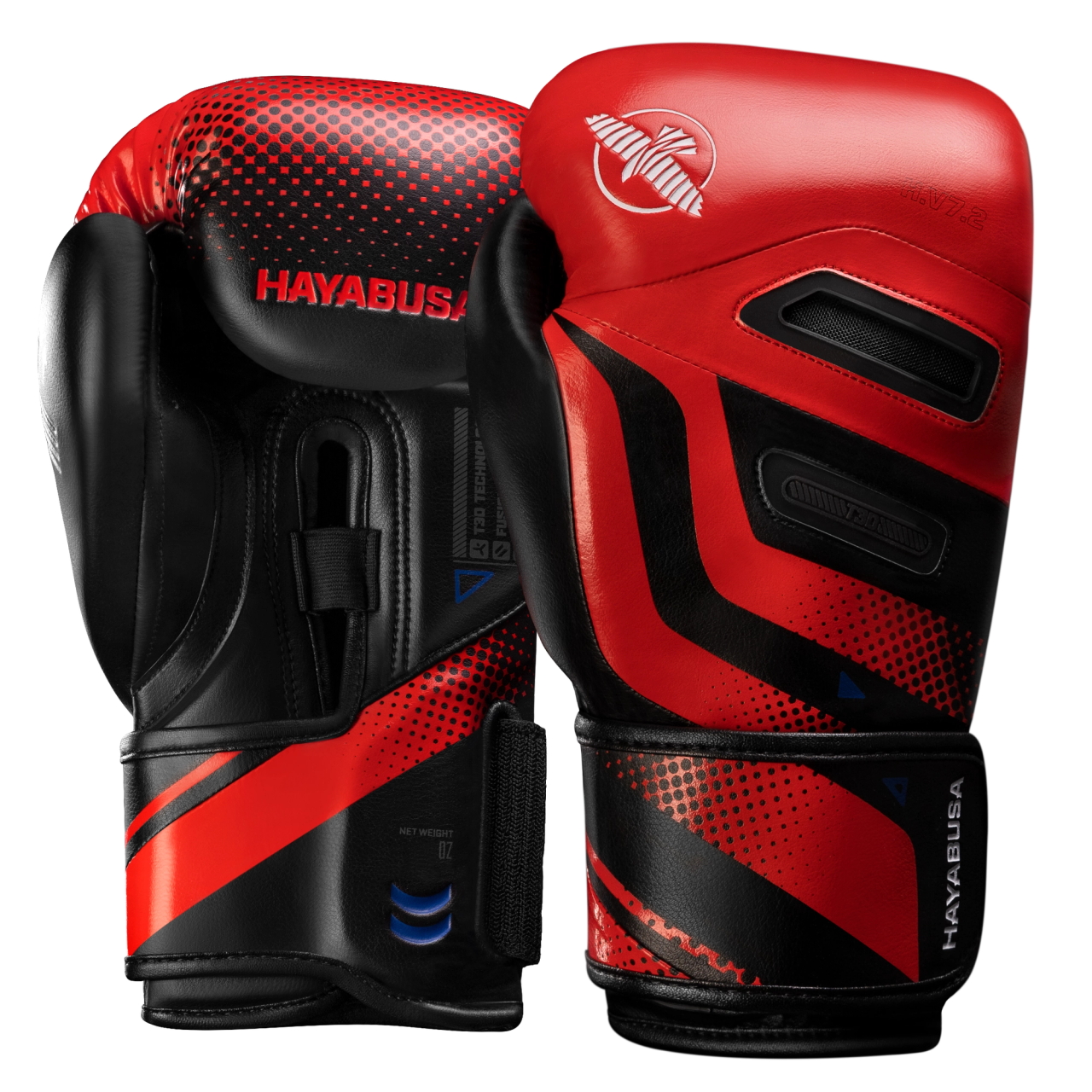
Explore this need in the finder →T3D is not just another colorway of the standard T3. Hayabusa gives it a separate product identity and a different knuckle-cushioning system: a 3D-printed elastomeric-resin lattice rather than the T3’s layered foam. The two models share the Dual-X closure and four Fusion splints, so the practical choice is less about one having a wholly different wrist layout and more about whether the unusual lattice construction and its specific material claims are meaningful to you. This is a research-based assessment of current published information, not a wear or impact test.
What the T3D page actually identifies
The US product page names T3D Boxing Gloves, shows Radiant Red, Cobalt Blue, Ivory White, and Phantom Grey colorways, and lists 10, 12, 14, 16, and 18 oz configurations. The page currently displays a waitlist marker beside 18 oz; availability changes, so I treat the size as a listed configuration rather than a promise that it can be ordered now. No public SKU was visible in the page text. A seller offer using only “T3” in its title is not enough to establish that it is this 3D-lattice model.
The product page describes this as an intermediate/advanced glove. Its most unusual element is a custom-tuned printed lattice, which Hayabusa says contains struts in varying densities. That is a construction description. Claims on the page about better impact absorption, comfort, or longer life are the manufacturer’s claims, not independent measurements reported here. Without a published comparative protocol or an independent test, the lattice should be treated as a design distinction—not proof that the glove outperforms foam in your sessions.
The big difference is padding, not the wrist system
T3D uses Dual-X interlocking hook-and-loop straps and four Fusion splints, with an attached thumb, perforated palm, and grip bar. Those details closely resemble the standard T3 arrangement. The direct contrast is at the knuckles: the standard T3 uses multi-layer foam, while T3D replaces that with the resin lattice. T3D also lists a temperature-regulating AG fabric lining; standard T3 lists a soft polyester lining. Neither description establishes how warm, stiff, or comfortable a glove will feel once wrapped.
This shared wrist architecture is useful when comparing the models. If you already prefer the T3’s closure and splinting but want a different cushioning construction, T3D makes that a distinct decision. If your main question is whether Dual-X straps or four splints are right for your wrist, the two T3 models do not offer a clean A/B test of that feature—their published support system is the same. Wrist shape, wrapping, fastening technique, and glove pocket fit still need individual consideration.
Read the size guidance before choosing a session
Hayabusa’s T3D page recommends 10–12 oz for bags and pads, then 14–18 oz for bags and pads, partner drills, and sparring. Those are the manufacturer’s stated size/use pairings. They are not a gym rule, and the page does not establish approval from a coach, sparring partner, or sanctioning body. In particular, the 18 oz selector’s waitlist marker is not a reason to substitute a different model or assume an equivalent version is available.
Ounces refer to glove weight; they do not tell you how much room the hand pocket has. Hayabusa’s general glove-buying guide treats weight, training purpose, closure, and hand fit as separate considerations. Check any size chart against your wrapped hand and ask your coach what weight is allowed. If you plan to use one pair across the bag and partner work, decide which sessions matter most and verify the actual size with the gym before ordering.
What the premium construction can—and cannot—settle
The spec list names Vylar engineered leather for the shell and an elastomeric resin lattice for hand protection. It does not provide a published glove mass tolerance, an internal hand-volume measurement, a cleaning schedule, or long-term compression data. “Resin” and “3D printed” identify a construction method, but they do not answer whether your hand will prefer its pocket shape or how it will feel after repeated rounds. The maker’s claims about durability and instant energy damping should not be mistaken for independently verified performance.
The T3D is therefore easiest to justify for someone who specifically wants to compare that lattice approach with conventional layered foam and likes the T3’s dual-strap support design. It is harder to justify on the basis of a generalized “more protective” label. If a familiar foam construction, lower complexity, or a published fit experience from your own gym matters more, the standard T3 provides a straightforward same-family comparison—but that too should be fitted rather than assumed.
Buying checks and the limits of this assessment
Before choosing a listing, confirm that it says T3D rather than T3, T3 LX, T3 Kanpeki, or T3 Lace Up; verify the exact weight and color in the cart; and inspect the seller’s return terms. Check that your gym accepts the selected weight for each planned session. Try the glove with the wraps you use if possible. Do not infer a particular edition or availability from a marketplace image alone.
I have not worn, owned, measured, or impact-tested T3D. The reviewed material cannot establish individual comfort, hand-pocket fit, actual cushioning behavior, long-term resin or seam durability, or injury prevention. The useful conclusion is narrower: T3D is a separately named glove with a distinct printed-lattice padding system, the T3-family Dual-X/four-splint support layout, and explicit weight-specific manufacturer recommendations. Those are the points a buyer can verify and compare before choosing.
Key specifications
Key details at a glance
| Listed glove weights | 10 / 12 / 14 / 16 / 18 oz |
|---|---|
| Closure | Hook-and-loop strap |
| Wrist-support structure | Dual-X · four Fusion splints |
| Knuckle padding | 3D-printed elastomeric resin lattice |
| Outer material | Vylar engineered leather |
| Lining | temperature-regulating AG fabric |
| Attached thumb | Yes |
Use the exact model’s instructions for operating limits, supplied equipment and version differences.
Sources for this review
Sources for this assessment
Compare the fit to your training
Use the finder to compare documented weight, closure, and use guidance; then confirm gym rules and exact seller details.